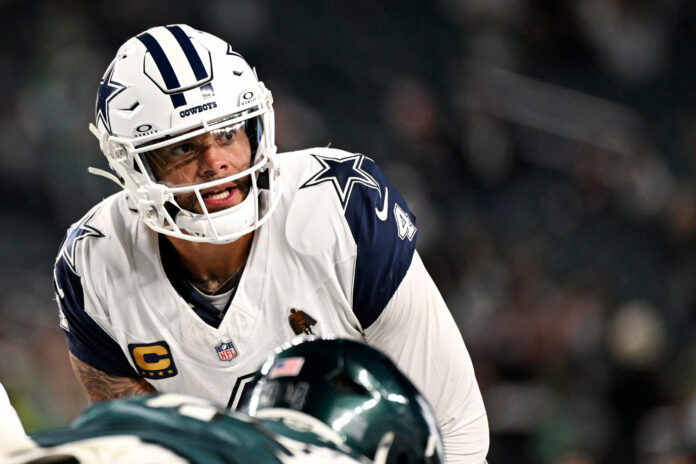
One year has passed since Dallas Cowboys defensive end Marshawn Kneeland died by suicide on November 6, 2025, and the team is finding new ways to keep his memory alive. Quarterback Dak Prescott spoke to reporters on Thursday, November 5, about a player-led initiative called Huddle 94 that aims to create safe spaces for teammates to discuss their struggles. The program was designed to help players open up about life stressors outside of football, with the hope that such conversations could have helped Kneeland before his tragic death.
Prescott said the group allows players to build trust and talk about burdens they carry, noting that he is excited to see how the initiative grows over time.
The Cowboys organization has been working to support Kneeland’s legacy while also helping current players cope with the grief of losing a young teammate. Head coach Brian Schottenheimer told reporters that the team has been having private conversations about how to honor Kneeland without making the tribute public. Schottenheimer noted that while there are many ways the team honors him inside the facility, the most important work happens in the quiet moments between players. The team also established a memorial fund to provide financial security for Kneeland’s girlfriend, Catalina Mancera, and their son, Makhai, who was unborn when his father passed away.
A Plan for Open Conversation
The Huddle 94 initiative is a three-part series of roundtable discussions that take place throughout the NFL season. These meetings are led by players themselves rather than coaches or staff, which encourages a sense of brotherhood and shared responsibility among the roster. The goal is to create an environment where players feel comfortable sharing their fears and pressures before they reach a point of crisis. According to the Dallas Cowboys official site, the program works alongside existing mental health resources provided by Team Mental Health Clinician Dr. Heather Twedell. This approach ensures that players have both peer support and professional guidance when they need it most.
Prescott emphasized that the purpose of these small groups is to address the specific stressors that come with professional football and life in general. He explained that if these resources had been available to Kneeland, they might have offered him a way to cope with his burdens. The quarterback described the initiative as a way to honor Kneeland by creating the conversations that were missing when he was alive. “Just trying to honor him by creating those conversations, by creating that group,” Prescott said in an interview with PEOPLE.
He added that he believes the program will be big and needed because it allows players to hear from one another about how they feel.
Head coach Brian Schottenheimer confirmed that the organization has begun these talks with the players to ensure they understand the importance of mental health. He noted that many players on the current roster did not know Kneeland personally, so it was vital to share who he was as a man and how he carried himself in the locker room. Schottenheimer told Yahoo Sports that the grief is real and the pain is real for everyone involved.
He stated that the team will continue to honor Kneeland in ways that stay between the players and their families, focusing on the legacy he left behind rather than just the tragedy of his death.
The Weight of Grief in the Locker Room
The loss of Kneeland at age 24 hit the Cowboys organization hard, especially for players who knew him well. Kneeland had scored his first NFL touchdown just days before his death, a moment that his former high school coach Brandon Kimble celebrated with him via text message. Kimble recalled sending messages to Kneeland after the touchdown against the Arizona Cardinals on November 3, 2025, saying that God had them and that they were about to stay healthy. A year later, Kimble still sends texts to Kneeland, but he knows a response will not come, a reality that underscores the finality of the loss.
Teammates like safety Juanyeh Thomas have found their own ways to keep Kneeland close. Thomas keeps his Instagram profile picture as the number 94 to honor Kneeland’s jersey number and has purchased three of his jerseys in different colors. He also framed a picture of Kneeland’s touchdown celebration and hangs it in his locker as a daily reminder. Thomas admitted that he often fights back tears before kickoff when he thinks about his former teammate.
Engraved with the number 94 on one side and the initials MK on the other, the thigh pads worn recently by Linebacker DeMarvion Overshown demonstrate how Kneeland’s memory is integrated into the gear athletes use during games.
Prescott has been open about his own history with grief, having lost his mother to colon cancer in 2013 and his brother Jace to suicide in 2020. He recalled receiving the news of his brother’s death via a phone call from his father, a moment that left him in tears as he tried to understand why it happened. Prescott said he knew his brother had a lot of burdens on him, and that realization helps him connect with the struggles Kneeland faced.
“I mean, I sat there and tried to gather what had happened and wanted to ask why for so many reasons,” Prescott told Graham Bensinger during an interview. He added that he knows his brother carried heavy loads, just as Kneeland did.
Prayers Before Every Game
For Prescott, honoring Kneeland is not just a team initiative but a personal ritual that happens before every game he plays. He explained that he says a prayer each time he steps onto the field and ends it by asking God to allow him to play for Kneeland and for people who can no longer do so. “He’s missed. He’s missed greatly from a lot of people around here, and in this organization,” Prescott said to reporters. He expressed appreciation for how the team is honoring Kneeland and noted that the loss is felt deeply by everyone in the Cowboys family.
This personal connection to Kneeland drives Prescott’s advocacy for mental health awareness within the league. He believes that life is delicate and that people should never take their moments for granted, whether they are playing football or doing anything else in life. Prescott urged everyone to be thankful and to tell the people around them that they love them. His message is clear: the struggles people face are often too much for one person to handle alone, but a community or family can help carry the weight.
“Because our adversities, our struggles, what we go through is always gonna be too much for ourselves and maybe too much for even one or two people, but never too much for a community or too much for people in the family that you love,” he said.
The Cowboys will face the Indianapolis Colts on Sunday, November 8, at Lucas Oil Stadium, and the team is expected to carry Kneeland’s memory into the game. While the focus is on winning to get the season back on track, the emotional weight of the anniversary will be present for the players. Schottenheimer mentioned that the team has several things in the facility that honor Kneeland in areas that only the players can see, creating a private space for remembrance. The team’s efforts to keep his legacy alive show that they are committed to supporting each other through the difficult times that come with professional sports.
A Legacy of One Love
Kneeland was known for his smile and his favorite saying, “one love,” which is now displayed on a mural at his former high school, Godwin Heights in Michigan. His friends and teammates remember him as a player with a unique energy that made his death hard to believe. Ryan Flournoy, a wide receiver on the Cowboys, said that there was just an energy to Kneeland that made his passing so shocking to those who knew him. Flournoy added that November 6 will always stick with the Cowboys as a day of remembrance for their fallen teammate.
July saw the Concussion and CTE Foundation reveal that Kneeland had Stage 1 CTE at the time of his death, which added further complexity to understanding his struggles. This finding highlights the physical and mental toll that football can take on players, even at a young age. The team and the league are working to address these issues through programs like Huddle 94, which aim to provide better support systems for current and future players. The goal is to ensure that no player has to face their burdens alone, and that resources are available to prevent tragedies like Kneeland’s from happening again.
Prescott’s leadership in this area shows how personal experience can drive positive change within an organization. By sharing his own story of loss and grief, he has helped create a culture where players feel safe discussing their mental health. The Huddle 94 initiative is a direct result of this openness, providing a structured way for players to connect and support one another. As the Cowboys continue their season, they carry the memory of Kneeland with them, honoring his life by working to create a safer and more supportive environment for everyone.
Looking Toward the Future
The Dallas Cowboys have made significant investments in Marshawn’s legacy, including donations from the Jones family, players, and coaches to support the future of Kneeland’s child. These efforts go beyond just financial support and aim to create opportunities for youth and promote mental health awareness in the community.
As the team prepares for their game against the Colts, the focus remains on both the game and the memory of their teammate. The players know that they are playing for more than just a win on Sunday; they are playing to honor a brother who is no longer with them. The conversations started by Huddle 94 will continue throughout the season, building a stronger culture of brotherhood and trust among the roster. Prescott believes that these efforts are needed and that they will help players navigate the challenges of their lives both on and off the field.
By creating spaces for honest conversation and providing resources for mental health, the team is working to ensure that Kneeland’s legacy is one of hope and healing. The game against the Colts on Sunday will be a moment to reflect on where the team has been and where they are going, with Kneeland’s memory guiding their way forward.